

Critters Down Under: Shore Flies in Greenhouses

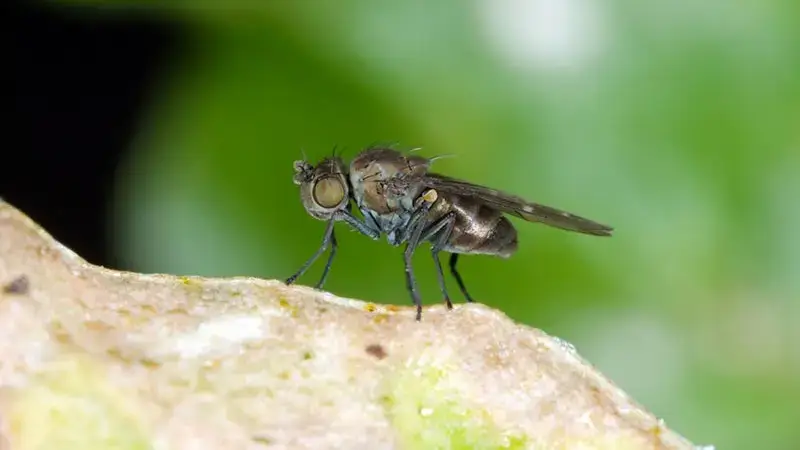
Shore flies (Sactella stagnalis) are the unquestionable ringleaders of nuisance insects found in greenhouses. While they can cause the spread of diseases and fungal spores in the greenhouse, they don’t inflict damage directly to the crop. In this article, we will look at how to differentiate shore flies from fungus gnats, what kind of damage they cause, and steps to take for the prevention and management of infestation.
What are the Differences Between Shore flies and Fungus Gnats?
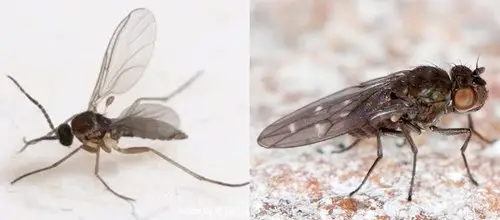
Shore flies are often confused with fungus gnats, but there are some noticeable differences. Shore flies closely resemble fruit flies with both short antennae and legs, and have five white spots on their dark-colored wings (Figure 1). Shore flies are strong fliers and can quickly spread throughout a crop.
Fungus gnats, on the other hand, have long legs, long antennas, and look more like mosquitos. They do not have white spots on their dark wings and are generally weak fliers (Figure 2).
| Shore Flies | Fungus Gnats | |
|---|---|---|
| Food source | Exclusively algae and decaying organic matter | Primarily algae |
| Larvae |
Opaque/tannish color |
White or translucent color Dark head No visible breathing tubes |
| Adults | Short antennae Strong fliers 5 light spots on dark wings Resemble fruit flies |
Long antennae Weak fliers No spots on wings Resemble mosquitoes |
Damage
Shore flies (Sactella stagnalis) feed mostly on algae and decaying organic matter found in the growing medium but cause no direct damage to greenhouse crops. However, they are known to transmit and spread disease and fungal spores throughout greenhouses, and if ignored may cause significant problems.
Life Cycle of Shore Flies
In warm weather, it takes as short as 9 days from when the egg hatches to the time the newly emerged female is sexually mature and able to produce her own eggs. A female shore fly can lay as many as 300 oblong white eggs at once on the growing medium surface, soil surface under a bench, capillary mats or other areas that are wet and have algal growth.
The eggs hatch in a day, after which the emerging larvae feed on algae. The larval stage lasts 4-6 days. They then enter a pupae stage that lasts for 3-5 days before emerging as adults from the growing medium or soil and live for 2-3 weeks (Table 2).
| Life cycle stage | Length of stage | Comments |
|---|---|---|
| Eggs | Hatch within one day | Laid on surface of wet, algae-rich environment |
| Larvae | Lasts 4-6 days | Feeding on algae takes place |
| Pupae | Lasts 3-5 days | Last stage in growing medium before emerging as a flying adult |
| Adults | Live 2-3 weeks | Only stage that does not occur in growing medium |
Shore Flies Control
Water and Soil Management in Greenhouse
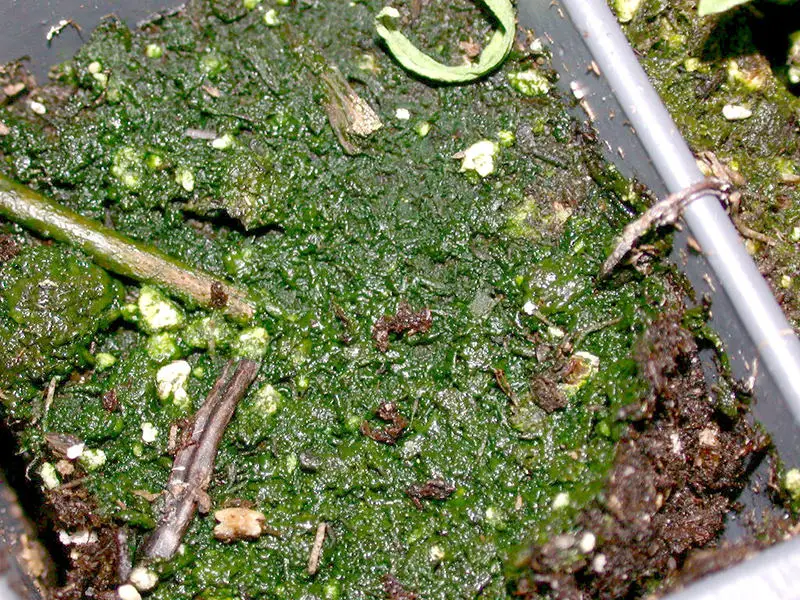
As stated above, shore flies feed exclusively on algae and some decaying organic matter. Therefore, they are most efficiently controlled by minimizing algae growth by avoiding standing water and allowing growing media surfaces to dry between waterings.
Other control methods include cleaning under benches, discarding used growing media and dead plants, sanitizing benches between crops and quarantining any crops that show infestation.
Monitoring and Management Strategies
While they do not offer a thorough solution to infestation, yellow sticky cards are a very effective tool in monitoring shore fly populations and indicate when chemical control may be necessary.
In Conclusion
The best way to prevent shore fly infestations is to avoid overwatering the growing media by letting it dry completely between waterings. If using PRO-MIX® BX AGTIV® AMPLIFY™, let it become a light brown or tan color before the next irrigation. All PRO-MIX products undergo rigorous testing during and after manufacturing as part of our Quality Assurance program.
Following the steps of Integrated Pest Management (identify, evaluate, prevent, action and monitor) is always an effective way of preventing and controlling insect infestation.


