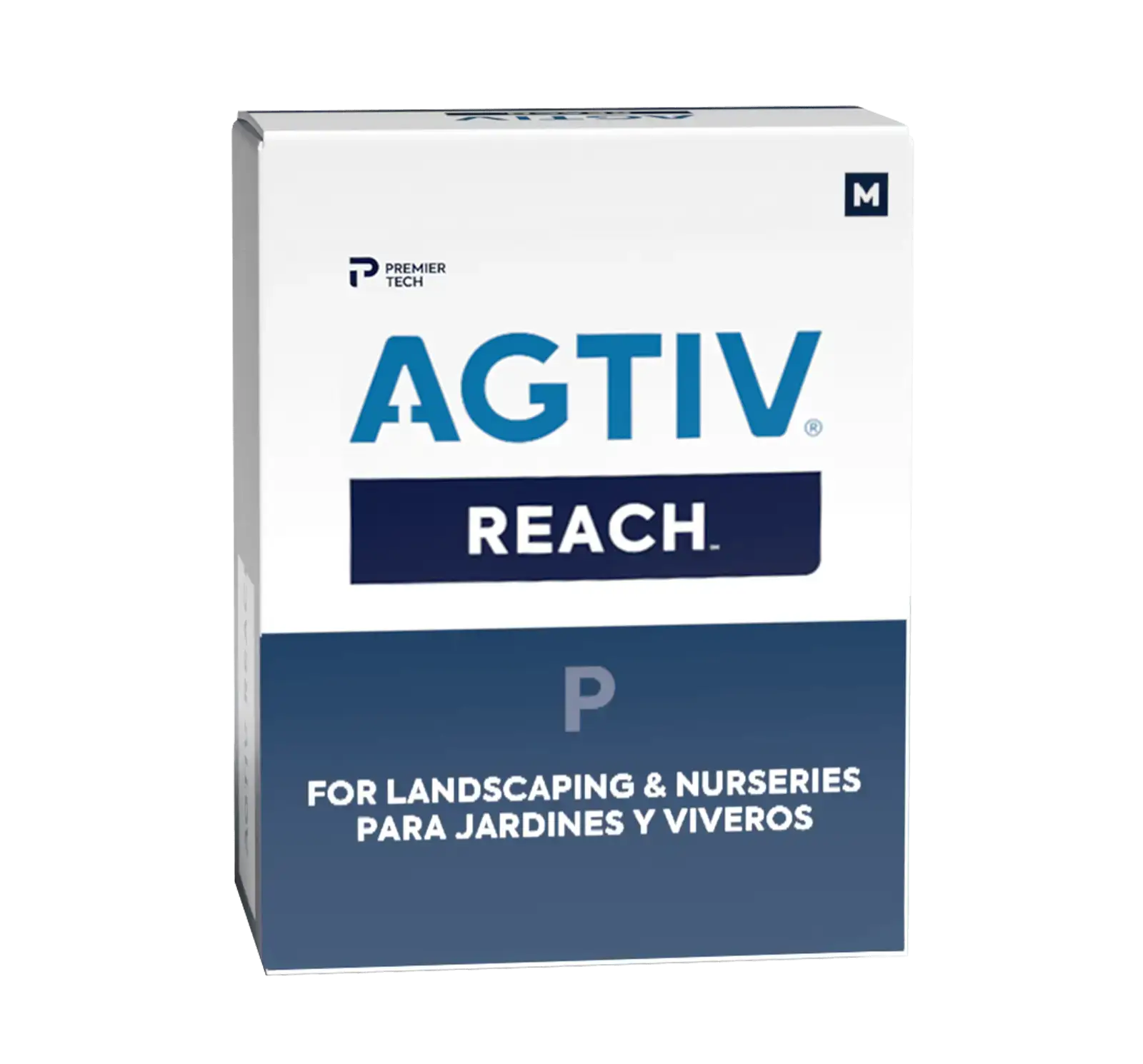
AGTIV REACH® G for Landscaping & Nurseries

Former name: MYKE® PRO Landscape G / MYKE® PRO Nursery G

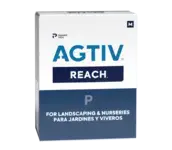
AGTIV REACH® G for Landscaping & Nurseries is a granular inoculant designed for most landscaping and nursery work. This product is used for incorporation into growing media, for transplanting into containers and for transplanting into soil. AGTIV REACH® creates the expansion of the root network by hyphae to reach further and uptake more nutrients and water, increasing resistance to abiotic stresses. AGTIV REACH® ensures your plants are stronger, healthier and more vigorous.

Benefits

  • Decreases plant losses 
  • Reduces transplant shock
  • Ensures faster establishment 
  • Reduces watering needs and fertilizer use 
  • Improves soil structure 
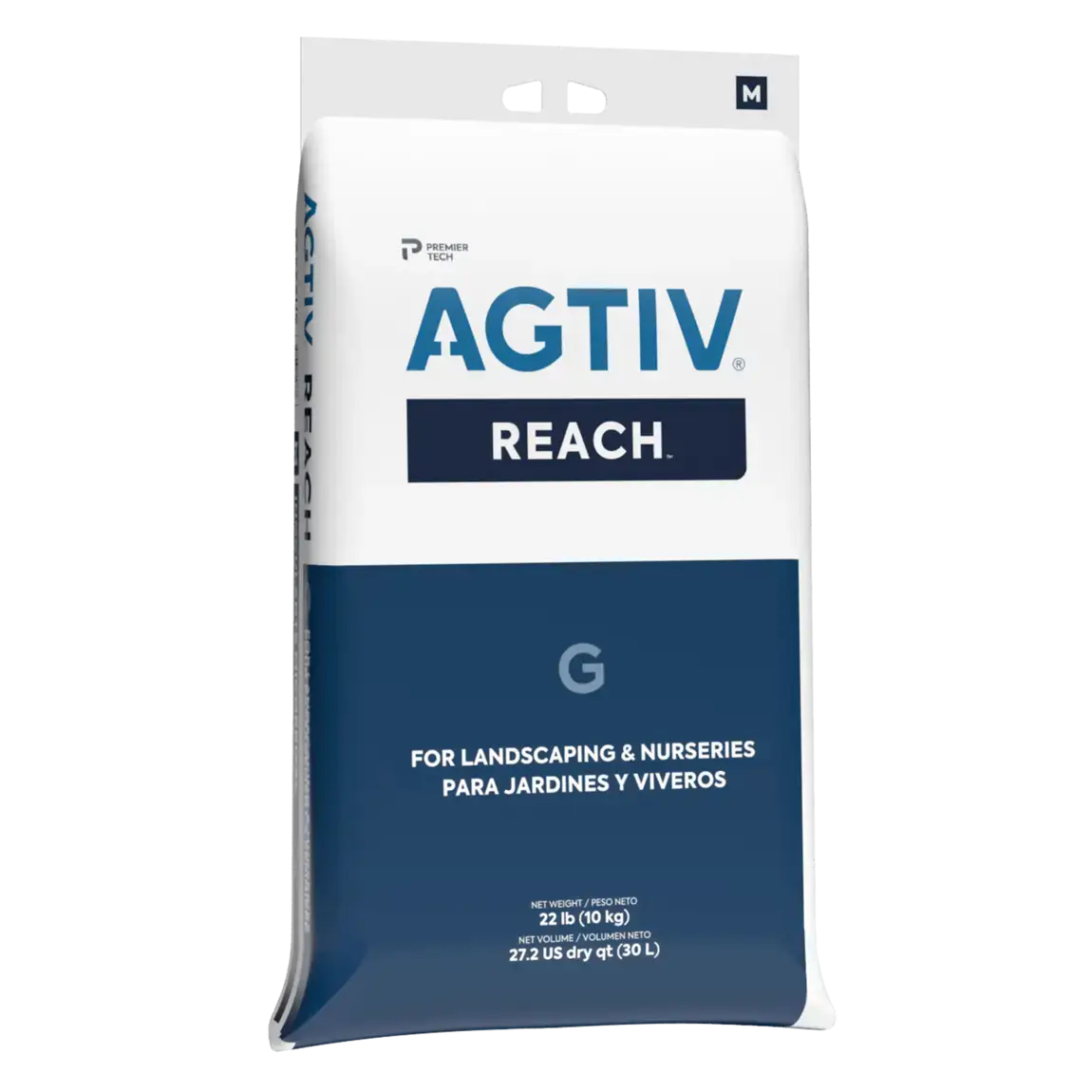
AGTIV REACH G for Landscaping & nurseries 10kg US
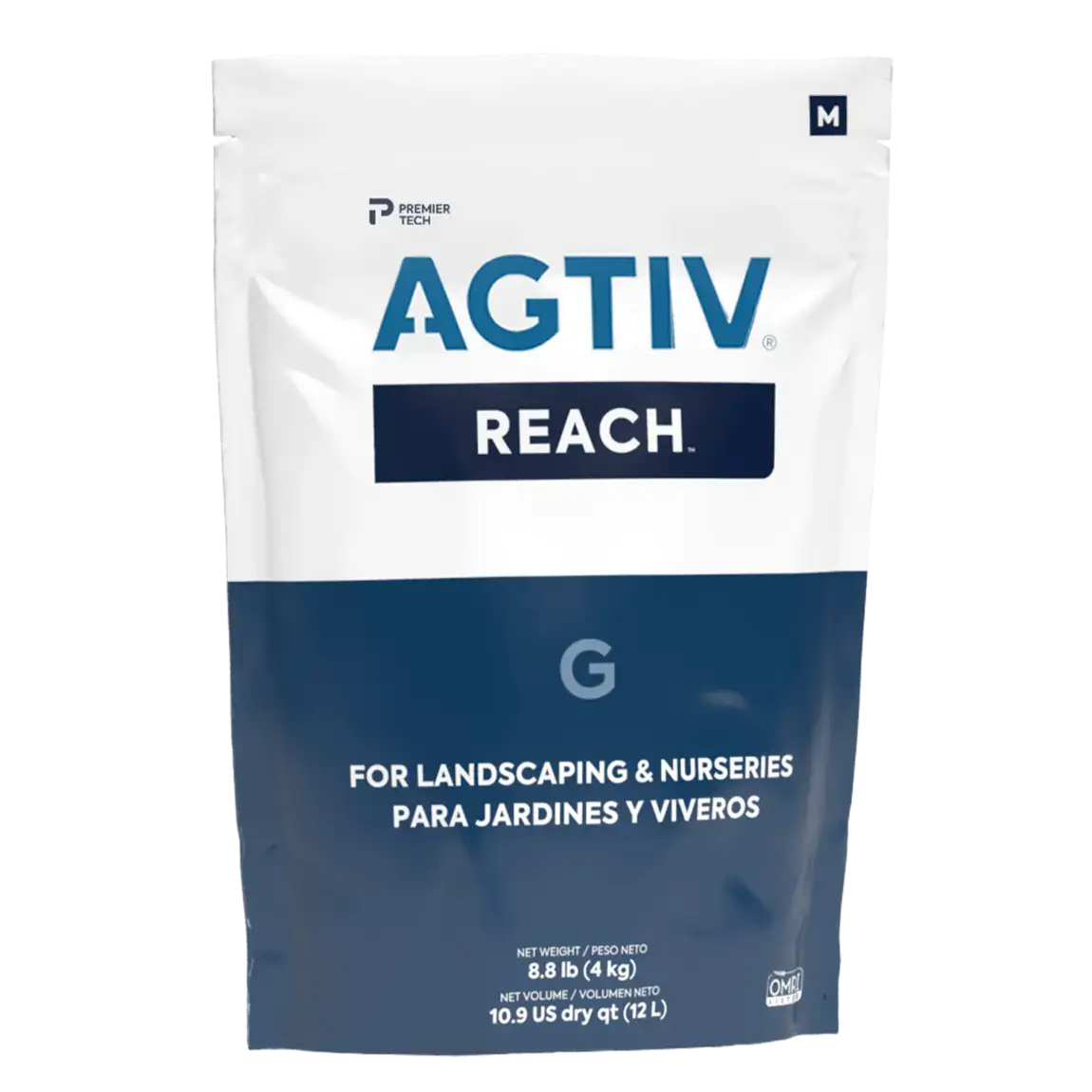
AGTIV REACH G for Landscaping & nurseries 4kg US
AGTIV REACH G for Landscaping & nurseries 10kg US
AGTIV REACH G for Landscaping & nurseries 4kg US

Also available in following formulation

Features

RECOMMENDATIONS 

Do not mix this product with non compatible pesticides or fertilizers. Refer to the complete list of compatible pesticides.

STORAGE AND HANDLING 

  • Store in a cool, shaded place.
  • Do not freeze or expose to temperatures above 95°F (35°C).
  • Avoid severe temperature variations.
  • Respect the best before date on the label.

* Plant compatibility: The following plant families cannot be colonized by the mycorrhizal fungi contained in this product: Orchidaceae (orchids),
Ericaceae (rhododendron, blueberries), Brassicaceae (cabbages), Amaranthaceae (kochias), Cariophyllaceae (carnations), Lupins.


Recommended Usages

Ornemental Ornamental

INCORPORATION INTO GROWING MEDIA 

Mix inoculant thoroughly into the growing media before filling the containers. Incorporate gradually while mixing for an even distribution

Volume of Growing Media Treated per 12 L Bag of AGTIV®
Container Volume Volume of Growing Media Treated
500 ml or less 240 L - 8.5 ft3
500 - 1500 ml 300 L - 10.6 ft3
1500 ml or more 400 L - 14.1 ft3


TRANSPLANTING INTO CONTAINERS

When transplanting, apply the product directly on roots or in the container. Refer to the application chart below.

Required Quantity - Container
Plugs 15 ml ¹⁄₁₆ cup
4 in. 30 ml 1⁄8 cup
#1 gallon 65 ml ¼ cup
#2 gallons 125 ml ½ cup
#5 gallons 250 ml 1 cup
#10 gallons 375 ml 1½ cups
#20 gallons 500 ml 2 cups


Required Quantity - Caliber
25-40 mm (1.0-1.5 in.) 500 ml 2 cups
41-50 mm (1.6-2.0 in.) 750 ml 3 cups
51-65 mm (2.1-2.5 in.) 1000 ml 4 cups
66-75 mm (2.6-3.0 in.) 1250 ml 5 cups
76-100 mm (3.1-4.0 in.) 1500 ml 6 cups
101 mm + (4.1 in. +) 1875 ml 7½ cups
Turf and Landscaping Turf and Landscaping

TRANSPLANTING INTO SOIL

TREES AND SHRUBS 

  1. Dig planting hole approximately twice the size of the transplant’s root ball.
  2. Spread this product all around the root ball where new root growth will occur and cover sides and bottom of planting area. Refer to the application chart below. Be sure that the roots are in contact with the product.
  3. Position transplant in the center of the planting hole and fill the remaining area around the root ball with soil.
  4. Water to settle planting area.

​​Diagram of a tree growing from a ball

Description automatically generated

ANNUALS, PERENNIALS AND BULBS
Apply directly to the roots or in the planting hole at a rate of 30 ml (2 Tbsp)/plant and 15 ml (1 Tbsp)/bulb.

Specifications

Inert ingredients

  • Perlite
  • Zeolite
  • Peat

Active ingredients

  • AGTIV REACH®
    • Rhizophagus irregularis : 15 viable spores per gram
    • Pisolithus tinctorius : 100 000 spores per gram
    • Rhizopogon amylopogon : 7 500 spores per gram
    • Rhizopogon fulvigleba : 7 500 spores per gram
    • Rhizopogon villosulus : 7 500 spores per gram
    • Rhizopogon luteolus : 7 500 spores per gram
    • Ascophyllum nodosum: 0.4%

AGTIV REACH® technology develops the root system, increasing nutrient and water uptake, which promotes plant growth, robustness and vigor

  • Expands root system 
  • Enhances nutrient and water uptake 
  • Produces more vigorous and healthy plants 
Code Size Cups
714501 30 L (10 kg) bag 120
714511 12 L (4 kg) bag 48
Box: 714504 12 x 1.5 L (12 x 500 g) bags 12 x 6


Certifications

Logo Organic Materials Review Institute (OMRI)

Organic Materials Review Institute (OMRI)

The Organic Materials Review Institute (OMRI) supports organic integrity by providing organic certifiers, growers, manufacturers, and suppliers an independent review of products intended for use in certified organic production, handling, and processing.

Download certificate

Premier Tech, the Company Behind the Brand

Experts at your Service

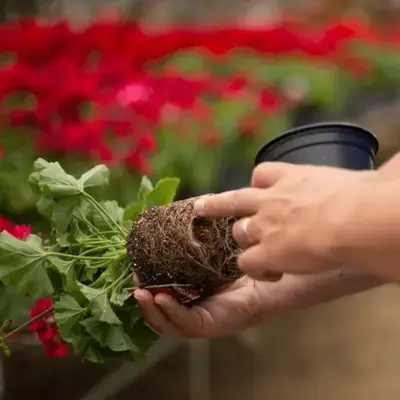
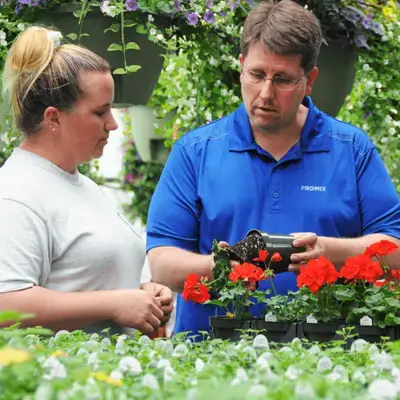
Our dedicated team of experts is committed to ensuring that professional growers maximize the potential of PRO-MIX® products. We offer comprehensive support to help you enhance your expertise and achieve optimal results in your cultivation endeavors.
Learn more

Premier Tech Growers and Consumers Unmatched consistency
Premier Tech Growers and Consumers Superior quality

Superior Quality

We meticulously choose each element of our products, from the carriers to the biological active ingredients, and all other components in between. Our rigorous quality control spans from the bio fermenters to the final formulated products, ensuring every aspect meets our high standards. This meticulous attention to detail offers you peace of mind, knowing you're receiving only the finest quality products.

Unmatched Consistency

Our beneficial microorganisms are seamlessly integrated into our growing media. We meticulously verify the viability and efficacy of each batch produced, guaranteeing that your chosen product maintains its quality and delivers consistent results every time.
Ask for a demo

Expert service

Frequently Asked Questions

Both endomycorrhizae and ectomycorrhizae are symbiotic associations between fungi and plants. The fungi implied in these associations belong to the fungus kingdom and are present in all continents, but they differ in their taxa, morphologies and life cycle. Endomycorrhizal fungi appeared some 450 million years ago and the ecto later around 200 to 250 million years ago.

Endomycorrhizae comprises the AMF (arbuscular mycorrhizal fungi), the ericoid, arbutoid, monotropoid and orchid mycorrhizae. The most abundant and prolific type of mycorrhizal fungus is the AMF which colonizes 80% of plant families and whose hyphae penetrate plant cortex cells, producing branching tree like structures called arbuscules, which greatly increase the contact surface area as a mean of nutrient exchange. In fact, the fungal hyphae do not penetrate the cell protoplast but invaginate the cell membrane (just like wearing a glove). The endo species are not plant specific and can colonize all receptive plant species. They are obligate symbionts, which means they need the presence of a plant to realize their life cycle and survive.

In contrast, ectomycorrhizae are typically formed between the fungus and the roots of around 7% of plant species, mostly woody plants including most conifers and some broadleaves such as oak, birch, beech and linden. Some are specific and symbiotic with only one species while others are generalists and form mycorrhizae with many different plants. Ectomycorrhizae consist of a hyphal mantle, covering the root tip with a Hartig net of hyphae surrounding root plant cells. Outside the root, the fungus forms an extensive network within soil and leaf litter. The fungus has a dual saprotrophic and biotrophic lifestyle that enables it to grow within both soil and living plant roots.

Haven't found the answer to your question?
We are here to help you!

Contact us

Similar Products